
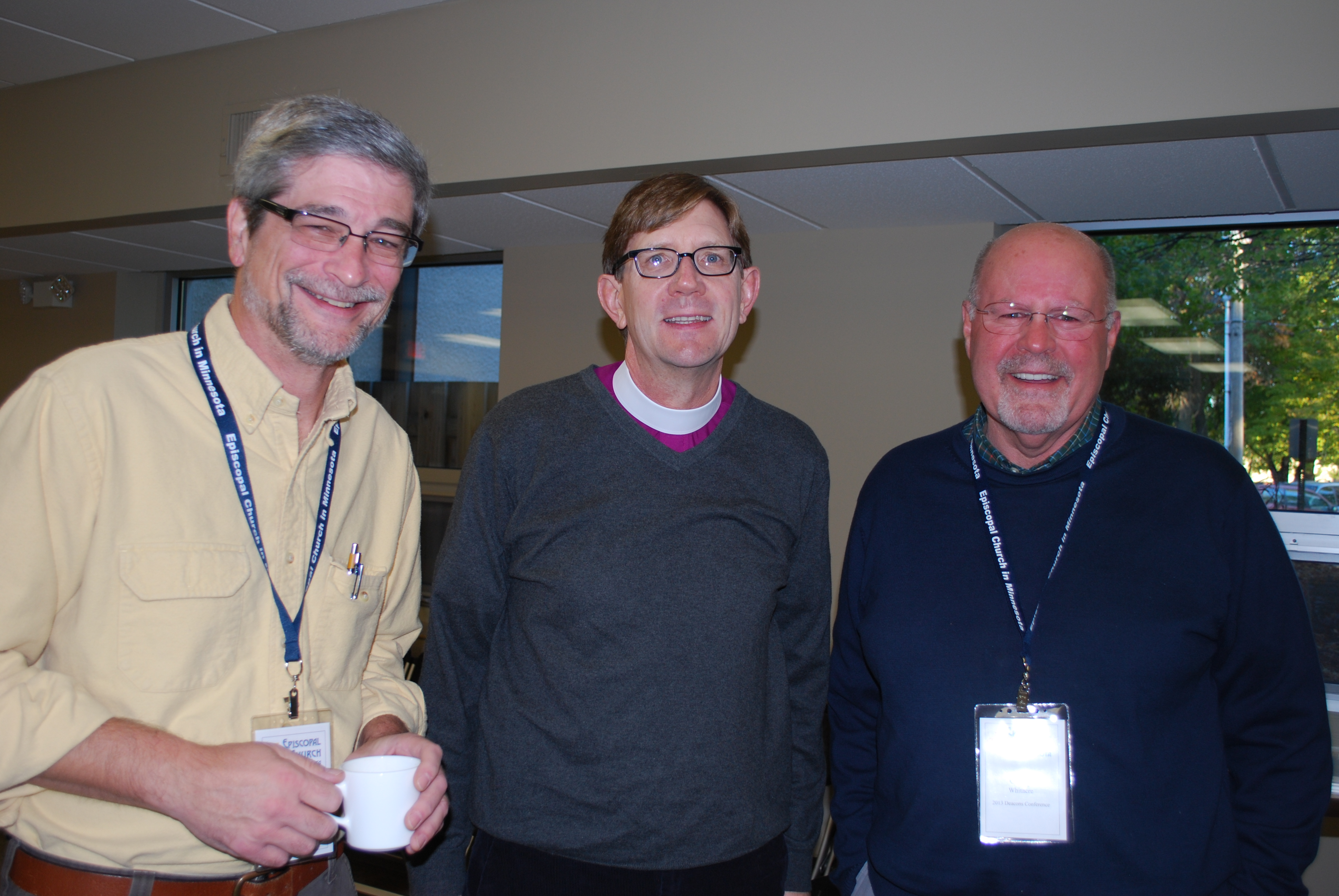
This last Saturday, we had an excellent gathering of Deacons from across the Episcopal Church in Minnesota (ECMN). We began the day with worship, including a renewal of ordination vows, followed by a lively discussion on mission — and then an intriguing presentation by Suzanne Watson Epting: Waves of the Diaconate. In the afternoon, there was a presentation from representatives of Sarum College about ministerial development and lifelong formation. Afterward, there was a World Café using missional church questions, and time for networking and sharing Mission Opportunity ideas for the coming year.
One of the presenters made a statement that raised the question about the distinction between secular and sacred. The discussion that ensued focused on the potentially false dichotomy between ‘secular’ and ‘sacred.’ Simply stated, the premise of a distinction between the secular and the sacred is that there are the people of God who go forth from sacred places to bring the Holy to a people and a place that is not Holy.
This, of course, is antithetical to what we proclaim as Episcopalians in our Baptismal Covenant when we commit to “seek and serve Christ in all persons.” It is also completely inconsistent with our understanding of God’s mission, whereby we understand that God is fully active in God’s world and that God invites us to join it. In God’s mission, the seminal theological question is: What is God up to in this context and culture, and how might we bring our gifts to bear?
Writer, professor and friend Barbara Brown Taylor describes it this way:
Gradually I remembered what I had known all along, which is that church is not a stopping place but a starting place for discerning God’s presence in this world. By offering people a place where they engage the steady practice of listening to divine words and celebrating divine sacraments, church can help people gain a feel for how God shows up– not only in Holy Bibles and Holy Communion but also in near neighbors, mysterious strangers, sliced bread, and grocery store wine. That way, when they leave church, they no more leave God than God leaves them.
The Holy One is in our midst — we are called to open ourselves and to invite others to share in God’s presence and mission.